The best time to visit Sharm El Sheikh: the sea lags the air by a month
Updated September 26, 2026 · 8 min read
Sharm El Sheikh is sold as a year-round destination, and that is nearly true. It is also useless as advice, because the months here differ in ways that decide whether your holiday works — and they do not differ in the way people assume.
Here is the whole year. Everything below follows from this table.
| Month | Air, daily max | Sea | Sunshine hours | Rain days / mm |
|---|---|---|---|---|
| January | 20°C | 23°C | 8 | 1 / 1 |
| February | 21°C | 22°C | 9 | 1 / 2 |
| March | 24°C | 22°C | 10 | 1 / 2 |
| April | 28°C | 23°C | 10 | 1 / 2 |
| May | 32°C | 25°C | 11 | 0 / 2 |
| June | 34°C | 26°C | 13 | 0 / 0 |
| July | 35°C | 28°C | 13 | 0 / 0 |
| August | 35°C | 28°C | 12 | 0 / 0 |
| September | 34°C | 27°C | 11 | 0 / 0 |
| October | 29°C | 27°C | 10 | 0 / 2 |
| November | 25°C | 26°C | 9 | 0 / 2 |
| December | 22°C | 25°C | 8 | 1 / 4 |
Sharm el Sheikh climate averages
The one thing to take from it: the sea runs a month behind
Read the two temperature columns against each other rather than downwards.
The air peaks in July and August at 35°C and has already fallen to 29°C by October — six degrees down. The sea peaks in the same months at 28°C and is still 27°C in October — one degree down. The water takes all summer to warm up and most of the winter to cool down, so it arrives late and leaves late.
From November to February the sea in Sharm is warmer than the air. In November the water is 26°C and the daily maximum is 25°C; in December it is 25°C against 22°C; in January 23°C against 20°C. That is not a rounding artefact, it is what a large body of water does next to a desert, and it is the single most useful fact on this page.
What follows from it is simple. If you are here for the reef, the months you want are on the back of the summer, not the front. October gives you 27°C water with air that is no longer punishing. April gives you 28°C air with water at 23°C, which is the same holiday with a colder sea.
The month most people should book
October. Sea 27°C, air 29°C, ten hours of sun, and essentially no rain. Nothing else on the table combines warm water with air you can walk around in.
November is the quiet argument. The water is still 26°C, the air drops to a mild 25°C, and it is outside the school holidays of most of the markets that fly here. If your holiday is mostly about the sea and you can tolerate an evening that needs a jumper, this is the value month.
April and May are the mirror image and the right choice if you want the desert as much as the water. May is already 32°C by day, which is the ceiling at which walking around a market stops being pleasant.
Why you cannot book around the wind
Sharm is windy. People assume it has a windy season and try to plan around it, and this is the part where the data disappoints them.
Weather Spark puts the windier part of the year at just 1.3 months, from 21 May to 30 June. The windiest month is June, with an average hourly wind speed of 10.5 miles per hour. The calmest month is July, at 9.6 miles per hour. Sharm el-Sheikh year-round weather
Less than a mile an hour separates the windiest month from the calmest. There is no calm season here — the Gulf of Aqaba funnels a persistent northerly, and what varies is the day, not the month.
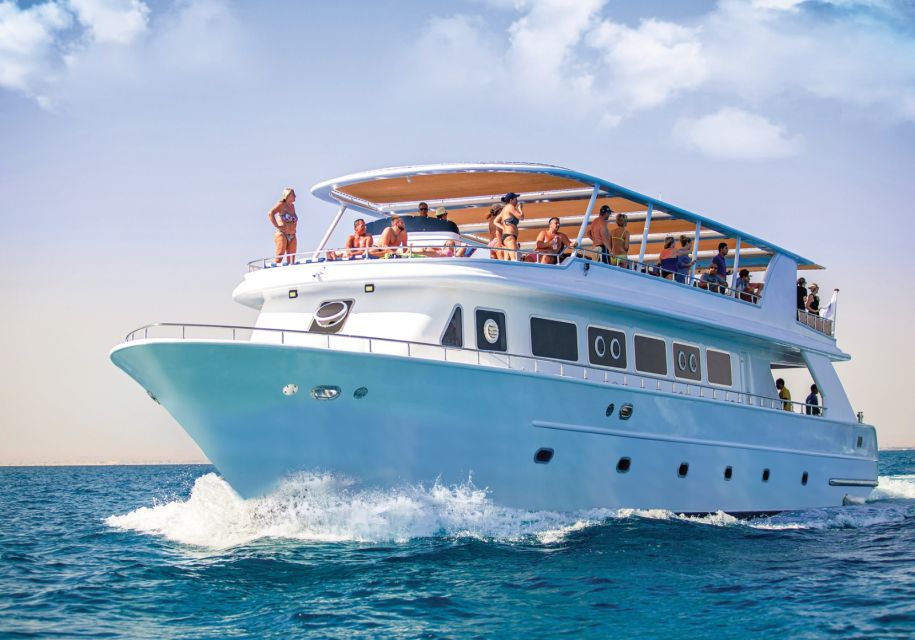
So plan for wind instead of against it. Book the boat day early in your stay so you have a spare day to move it to. Take the morning departure, because the wind builds through the afternoon. And if the sea is up on your one remaining day, take the trip that goes by road: the half-day to the national park by bus costs €17.78 and does not cross anything. The rest of the water days are under boat trips, 26 of them from €22.12, and snorkelling, 34 from €17.78.
The hot months, defined rather than described
Weather Spark gives the hot season as 3.8 months, from 29 May to 23 September, and the cool season as 3.2 months, from 6 December to 13 March.
Those dates are more useful than an average, because they tell you where the edges are. A holiday starting on 20 September is a summer holiday. One starting on 10 October is not.
In July and August, 35°C with twelve to thirteen hours of sun is not a beach temperature for everybody, and it changes what you can book. The desert trips move to sunrise, because an afternoon quad ride in August is an endurance event rather than an outing — the timings and what each version costs are in the quad safari, and the 29 desert safaris start at €11.85. Long boat days become genuinely demanding for small children; the alternatives are in Sharm El Sheikh with children.
The khamsin, which is the real weather event here
Rain is not what interrupts a holiday in Sharm. Look at the last column of the table: the wettest month of the year is December, with four millimetres.
What does interrupt it is dust. The khamsin is a hot, dry wind that lifts sand and raises dust storms, and it blows especially between March and May. On a khamsin day the sky goes the colour of weak tea, the visibility underwater drops, and boat trips can be cancelled. It does not last — these are episodes of a day or two, not a season — but if you are travelling in spring, keep one flexible day in the week and do not put the trip you care about most on the last one.
This is the honest asterisk on “April and May are lovely”. They usually are. They are also the window in which the only genuinely bad weather here happens.
Two dates that are not weather
Ramadan. In 2027 it is expected to run from about 9 February to about 10 March, with Eid al-Fitr around 11 March — but the start depends on the sighting of the moon and can shift by a day. Resorts and their restaurants run normally throughout; what changes is outside the gates. Daytime cafés in the Old Market may be closed or quiet, staff are fasting through the day, and the evening is livelier than usual after sunset. It is a good time to visit if you are interested in the country and a poor one if you had pictured a beer at noon in a souk.
The clocks. Egypt uses daylight saving time, and the changeover moves every tour pickup by an hour in a town where half the trips are timed to sunrise or sunset. Check the current dates before you plan around a departure time. Daylight saving time in Egypt
What actually varies more than the weather
Prices and crowds swing harder across the year than the thermometer does. The table above moves through fifteen degrees of air temperature; the number of people on a boat in August against the number in November is a bigger difference than that, and it changes the day more.
A reef with eight people on it and a reef with forty are not the same reef. If your holiday is built around the water, that argument alone is worth more than two degrees of sea temperature — which is the other reason November deserves a look.
When we would not come
July and August, if anyone in the party struggles in heat, and particularly with very small children or with anyone who does not tolerate strong sun. The water is at its best and the land is at its worst, and you will spend the week negotiating between them.
February, if the sea is the point. At 22°C it is swimmable and it is cold, and floating still while concentrating on a mask is how you get cold fastest — that problem is worked through in snorkelling in Sharm for the first time. February is a good month for the desert, the town and the day trips, and a poor one for a snorkelling holiday.
And the last week of a spring trip, for anything you cannot afford to miss. That is the khamsin’s window, and the strait between Sinai and Tiran is exactly the kind of exposed water it closes — the day itself is described in Tiran Island by boat. Book it early in the week, and keep the last day spare.